
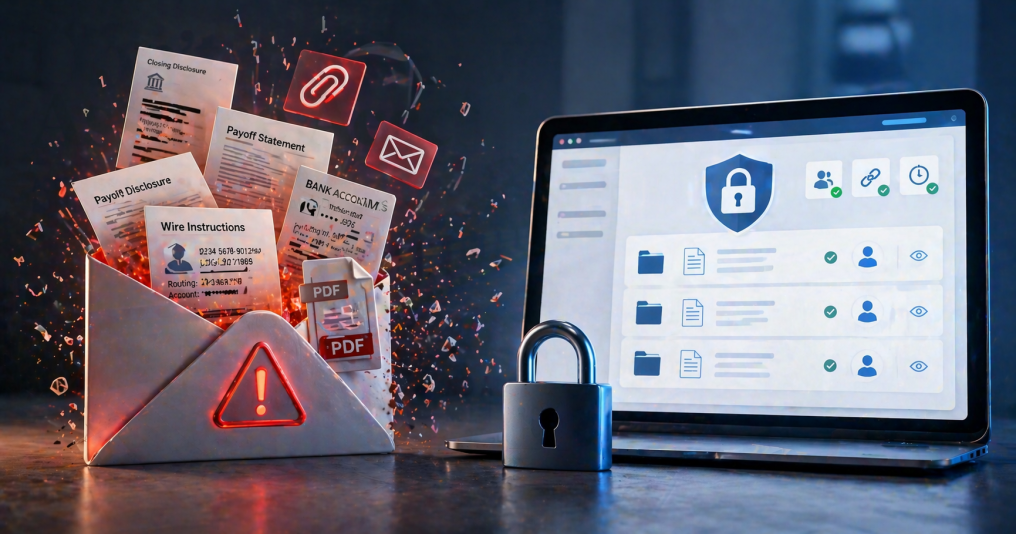
Prevent data leaks and ensure version control by ditching PDFs for a more modern approach.
By Bryan Johnson, IT Director, Alliant National Title Insurance Company
Although the risks of our digital-first economy are becoming increasingly well known, many people still are not sharing information safely. Far too many businesses rely on email and PDF attachments when sending transaction information, despite the problems they can pose for organizational security and efficiency. Thankfully, there is a better way forward: portals, permissions, and link expirations. These can all go a long way toward tightening your agency’s information controls while improving workflows at the same time. Here’s what that can look like in practical terms for your team.
What counts as sensitive info?
First, let’s dig into what counts as sensitive information that should NEVER go into emails or attached PDFs. Some of the common examples include:
- Anything that could be construed as non-public personal information (NPI), like social security numbers (SSNs), dates of birth (DOB), bank information and more.
- All wire instructions, payoff information, or disbursement data.
- Any statements from lenders or closing documents.
- All information that could be leveraged to impersonate transaction stakeholders, like signatures, account numbers, or scanned copies of IDs.
A common rule of thumb is this: If it could possibly harm someone or derail your transaction, find a different way to share it.
Pursue a portal-centric approach
Rather than risk compromising your security or efficiency with PDF attachments, pursue implementing a document-sharing portal for your agency. These portals can be broken down into two buckets. There are industry-specific document-sharing portals offered by brands like Qualia and SoftPro. And there are general document-sharing portals such as ShareFile, Dropbox, Google Drive and Microsoft OneDrive.
The portal type you choose should come down to your businesses needs. If you are a high-volume agency with multiple offices and large coordination needs, you’ll likely benefit the most from a more tailored solution. Custom platforms like these often excel at unifying document versions and creating a single source of truth to move transactions faster at scale.
On the other hand, if you are a small shop, a more generalized portal may be sufficient. Either approach involves tradeoffs, but you can benefit from looking inward and carefully assessing your team’s needs before pulling the trigger.
Implement best practices with your portal
After making your decision on a document-sharing portal, you should establish safeguards around permissions and links. Title agents are busy people, so implementing built-in guardrails is important.
Keep things simple: while employees can still use email to coordinate around closings, links—not attachments—should be how important or sensitive information is shared. The beautiful thing about links is that they are endlessly customizable with today’s modern tools. Consider establishing the following defaults for your links:
- Make each link “View only” as its default setting. Avoid allowing downloads unless completely necessary.
- Refrain from setting a link’s permissions to “anyone with the link.” This is critical for sensitive information.
- If your platform allows it, prohibit resharing links and require recipients to be invited users.
- DO NOT leave links live indefinitely. Consider a 7-day limit for IDs and wires and 2-4 weeks for other documents.
Taking these steps ensures you will be getting the most value out of your portal. And more importantly, it guarantees that you are using all available means to protect your customers’ transactions and guard your company’s reputation.
Become a more secure and reliable title partner
Amid the hustle and bustle of a transaction workflow, it can be tempting to attach important documents and send an email. But believe me when I say that you want to resist that impulse. While email and attachments are convenient, they can pose real risks to your agency’s security and long-term viability. Implementing and optimizing a modern document sharing platform with the right permissions and guardrails can help you work more safely and efficiently. Making this investment in your document sharing practices also demonstrates a real commitment to the security of your customers and partners. This will translate not only into satisfied customers but also solidify your reputation as a reliable title partner.